Is Seven Fields Right For Low‑Maintenance Living?
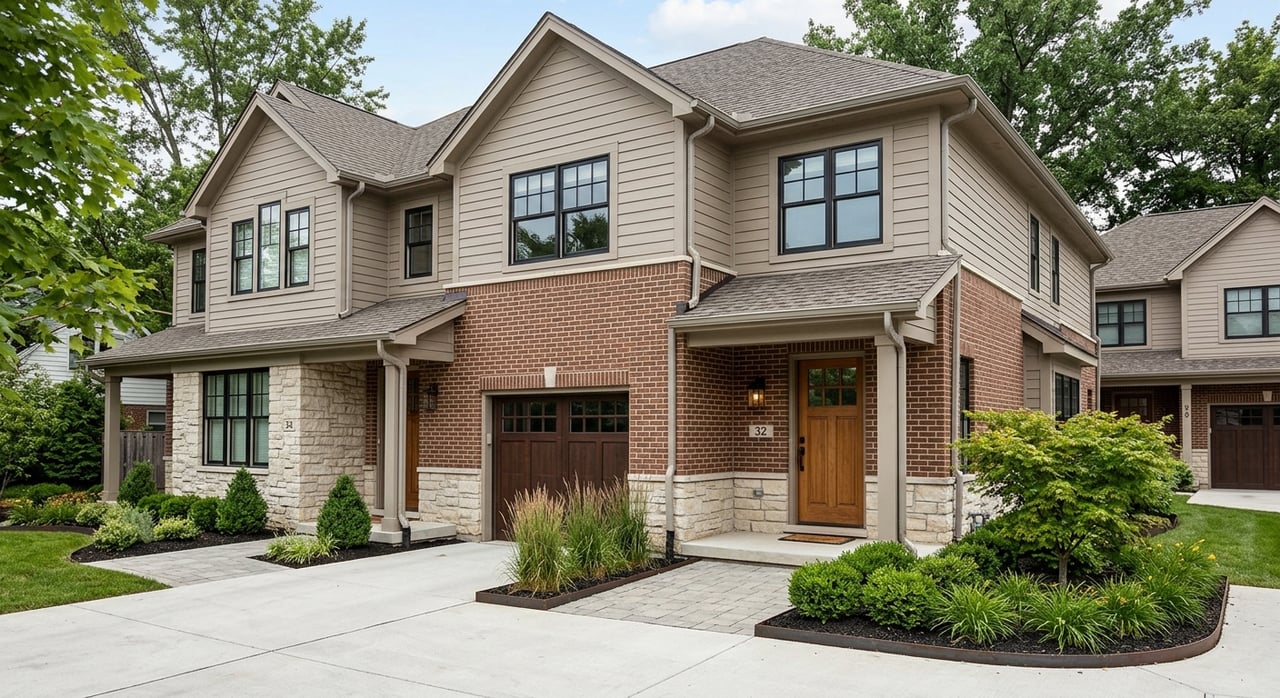
Wondering if Seven Fields can make everyday homeownership feel simpler? If you like the idea of less exterior upkeep, shared amenities, and easy access to daily errands, this small Butler County borough is worth a closer look. The key is understanding what “low-maintenance” really means here, what an association may handle, and what still falls on you as the owner. Let’s take a closer look.
Seven Fields is a small borough in southwestern Butler County with a mostly residential character. It is its own government entity, incorporated in 1983, and the borough lists its 2020 Census population at 2,919.
Its planning history matters if you are looking for low-maintenance living. According to the borough’s comprehensive plan, Seven Fields began as a planned community centered on a Town Center and Town Park, with commercial parcels along Route 228. That planned layout helps explain why the area often appeals to buyers who want convenience and a smaller-footprint lifestyle.
Low-maintenance living usually means you want to spend less time on yard work, exterior projects, and managing every part of a property yourself. In Seven Fields, that appeal comes less from a formal label and more from the borough’s compact size, community structure, and shared amenities.
The borough owns and operates a pool and community center. The Town Park also includes fields, a playground, pavilion space, and walking paths. That setup can make it easier to enjoy outdoor space and recreation without needing a large private lot to maintain.
Some neighborhoods in Seven Fields also have HOA-style administration. For example, the Hawthorne Commons community site includes a resident portal with community documents, a directory and calendar, dues-payment information, and communications related to rental and maintenance or modification requests. For many buyers, that kind of structure is part of the tradeoff that makes daily ownership feel more manageable.
Low-maintenance does not mean no maintenance. It usually means some responsibilities shift from the individual owner to a neighborhood association or unit owners’ association, often funded through monthly dues.
That can include care for common areas, shared open space, and other community operations. In practice, this setup may simplify your routine, but it also means you need to understand the rules, budget, and financial health of the association before you buy.
If you are considering a home in a planned community or condominium, Pennsylvania law gives associations broad authority to manage community operations. Under the Uniform Planned Community Act, associations may adopt rules and bylaws, create budgets for revenues, expenses, and reserves, collect assessments, hire managers and contractors, and handle certain legal or mediation matters tied to the community.
For condominiums, Pennsylvania’s Uniform Condominium Act creates a similar framework. A unit owners’ association may manage budgets, assessments, bylaws, and reserve spending. For buyers, the practical takeaway is simple: monthly fees are not just an extra cost. They are often the funding source for common-area care, reserves, and shared services.
On a resale in a Pennsylvania planned community, the seller must provide important association documents. These include the declaration, bylaws, rules and regulations, and a resale certificate with key financial and operational details.
That certificate may show the monthly common expense assessment, unpaid assessments or fees, proposed capital expenditures, reserve balances, the current operating budget, judgments, insurance coverage, and known violations. The contract is voidable until the certificate is delivered and for five days afterward.
For a buyer focused on low-maintenance living, these papers are not just legal formalities. They are one of the best ways to understand what you are paying for, how well the community plans ahead, and whether there may be surprise costs later.
If Seven Fields is on your list, a few due-diligence questions can help you compare properties more clearly.
These questions matter in any association-run setting, but they are especially important when your goal is a simpler ownership experience. A home only feels low-maintenance if the community structure is clear, well-managed, and aligned with your expectations.
One of the most important distinctions in Seven Fields is the difference between borough-owned amenities and private association amenities. They are not the same thing, and buyers should avoid assuming that a monthly fee covers both.
The borough operates the Town Park Pool and the Community Center. The community center’s rental rules also show separate resident and non-resident access. By contrast, Hawthorne Commons reflects a private association structure with dues payments and maintenance or modification requests.
This matters because it helps you understand what is public, what is private, and what your ownership costs actually support. If you are comparing homes, this is one detail that can change the value equation quickly.
For many buyers, low-maintenance living is also about convenience outside the home. You may be willing to trade a larger private property for easier access to errands, dining, and recreation.
Seven Fields notes businesses and restaurants in the area, but much of the everyday retail activity is in nearby Cranberry Township and Wexford/Pine. Cranberry Commons is an open-air shopping center anchored by TJ Maxx, PetSmart, and Fresh Thyme Market, with Target, Kohl’s, and Lowe’s nearby.
In Pine Township, the Village at Pine offers a mixed shopping plaza off Town Center Drive with Market District Supermarket, Starbucks, Jersey Mike’s, and other daily-errand businesses. Pine Township’s Market District page also lists pickup, delivery, pharmacy, deli, floral, catering, and GetGo service options at 155 Town Center Drive.
If your ideal routine includes quick grocery runs, nearby essentials, and less time spent driving across a larger area, that broader corridor can strengthen Seven Fields’ appeal.
Shared recreation can be a major part of the low-maintenance equation. It gives you places to be active and spend time outdoors without personally maintaining every amenity yourself.
Beyond Seven Fields’ own park, pool, and community center, nearby municipalities expand your options. Cranberry Township says it covers just over 23 square miles and has a population of more than 28,000, with parks, trails, and a waterpark that includes lap lanes, splash pads, a playground, and volleyball.
Pine Township has 17.0 square miles and a 2020 Census population of 14,691. Pine Community Park spans 105 acres and includes the Pine Community Center, trails, playgrounds, fields, and a splash pad.
For buyers who value shared amenities over private upkeep, that larger regional recreation network can be a meaningful plus.
If your top priority is low-maintenance living, Seven Fields, Cranberry, and Pine each offer a slightly different version of convenience.
Seven Fields is the most compact of the three and is most directly shaped by a planned-community model. That makes it a strong fit if you want a smaller footprint, shared amenities, and a more village-like setting.
Cranberry offers the broadest retail and recreation network. If you want the widest range of shops, services, and municipal amenities, it may feel more flexible.
Pine offers a middle ground. It combines strong community facilities and retail access with a larger township scale and a park-centered feel.
In simple terms, Seven Fields tends to suit buyers who want association-managed or community-managed convenience. Cranberry often fits buyers who want the broadest everyday options. Pine may appeal if you want North Hills access with substantial community amenities, but less of the compact borough identity that defines Seven Fields.
Seven Fields can be a smart option if you want a home base that feels easier to manage and well connected to nearby daily needs. Its compact scale, planned-community roots, borough amenities, and association-style neighborhoods all support that lifestyle, even if the borough is not formally defined as a low-maintenance community.
The real question is not whether Seven Fields is low-maintenance in theory. It is whether a specific property, association, and fee structure match the level of simplicity you want in real life.
That is where careful review matters. If you want a clearer picture of how a Seven Fields home compares with options in Cranberry or Pine, or you want help reviewing association details before you move forward, Michelle Bushee can help you evaluate the tradeoffs with a precise, local perspective.
Recognized as talented negotiators and trusted advocates for their clients, our team provides comprehensive real estate assistance for buyers and sellers in Pittsburgh and the surrounding areas.